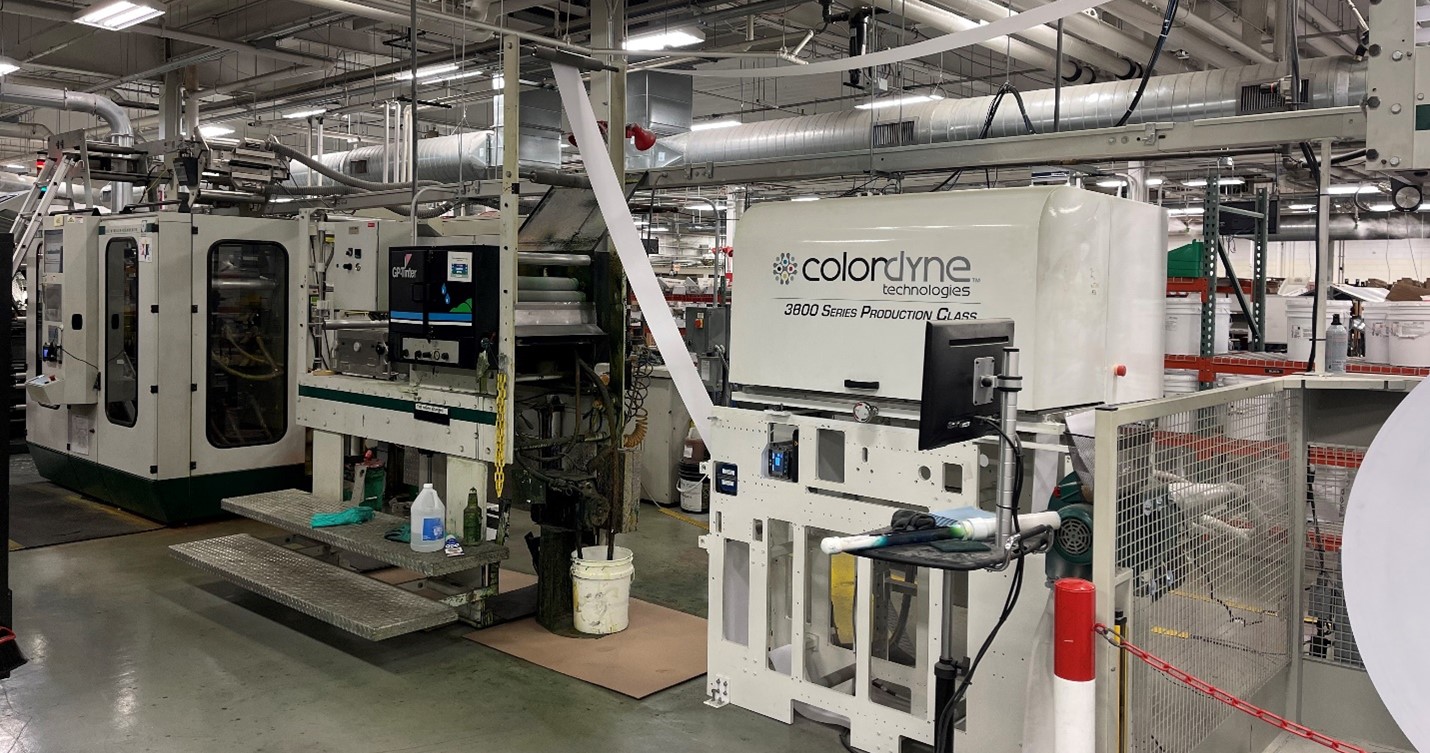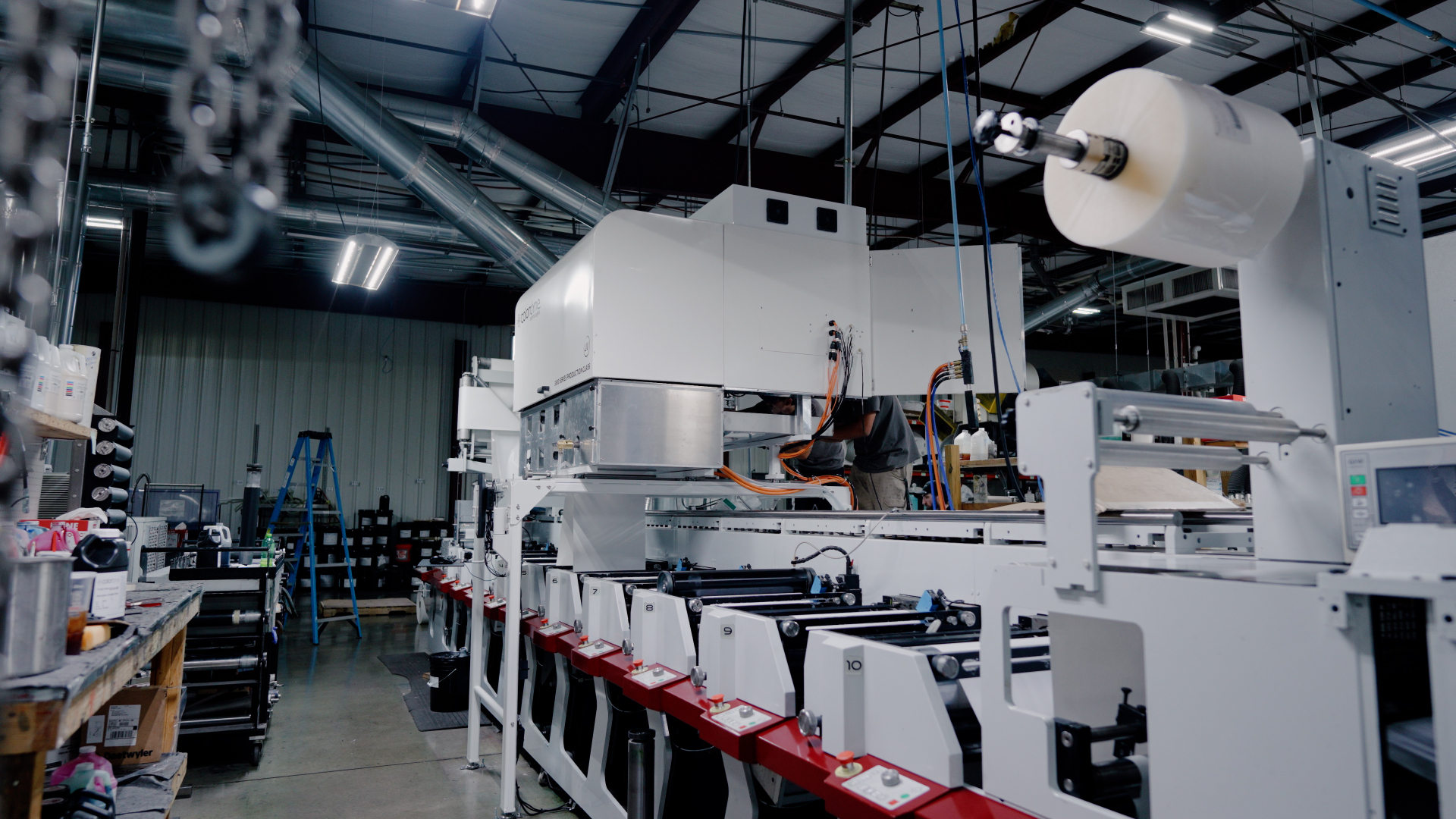
Integrating inkjet retrofitting technology into label and packaging operations is a testament to the industry's commitment to advancing productivity. Here's how the addition of this technology significantly enhances the efficiency of production processes.
Streamlining production processes
Inkjet retrofitting transforms traditional printing, allowing for faster and more efficient production cycles. By integrating digital inkjet engines onto existing flexo presses, companies can achieve high-quality, single-pass printing — significantly reducing the time taken for job setups and changeovers. That efficiency is crucial for handling high-volume orders and meeting tight deadlines.
Case study: AutoMate Label Solutions
AutoMate Label Solutions' journey into digital printing began with the installation of a Colordyne 17-inch UV inkjet engine. The move allowed them to produce single-pass inkjet labels efficiently, enhancing productivity and adapting quickly to customer demands.
Case study: First Tape & Label
With over 40 years of experience, First Tape & Label embraced inkjet retrofitting by acquiring Colordyne's 3600 Series UV Retrofit, and later a second-generation 3800 Series UV Retrofit. These installations streamlined production, facilitating faster turnarounds and cost savings, and leveraged unique job-chaining software for increased efficiency.
Maximizing output and quality
The precision and speed of inkjet printing ensure that not only is production output maximized, but the quality of prints is also enhanced. The ability to quickly adjust and customize print jobs without compromising quality is a significant advantage in today's fast-paced market.
Flexibility for diverse customer needs
The flexibility offered by retrofitting inkjet technology allows companies to handle a diverse range of printing jobs with ease. Whether it's short runs, long runs, or high-mix projects, retrofitting provides the capability to meet varied customer requirements effectively and promptly.