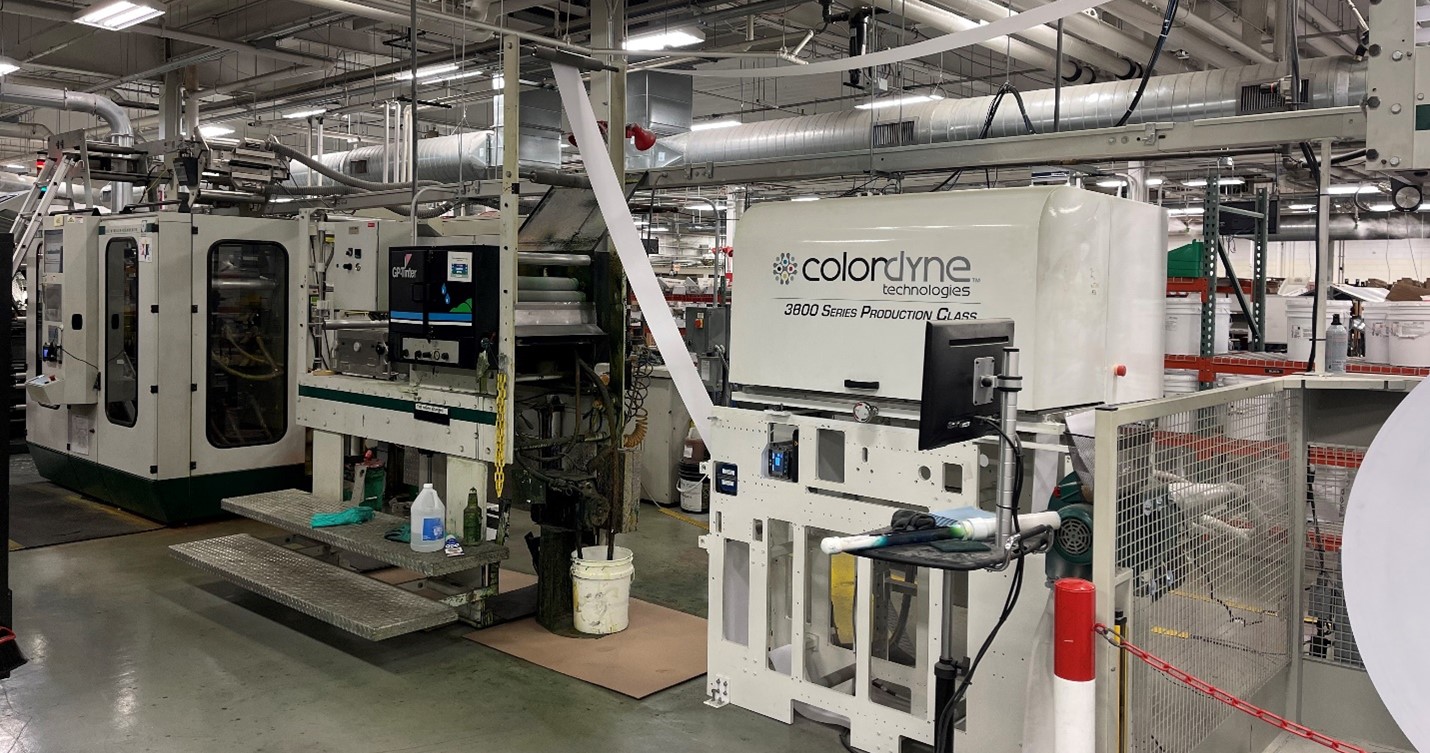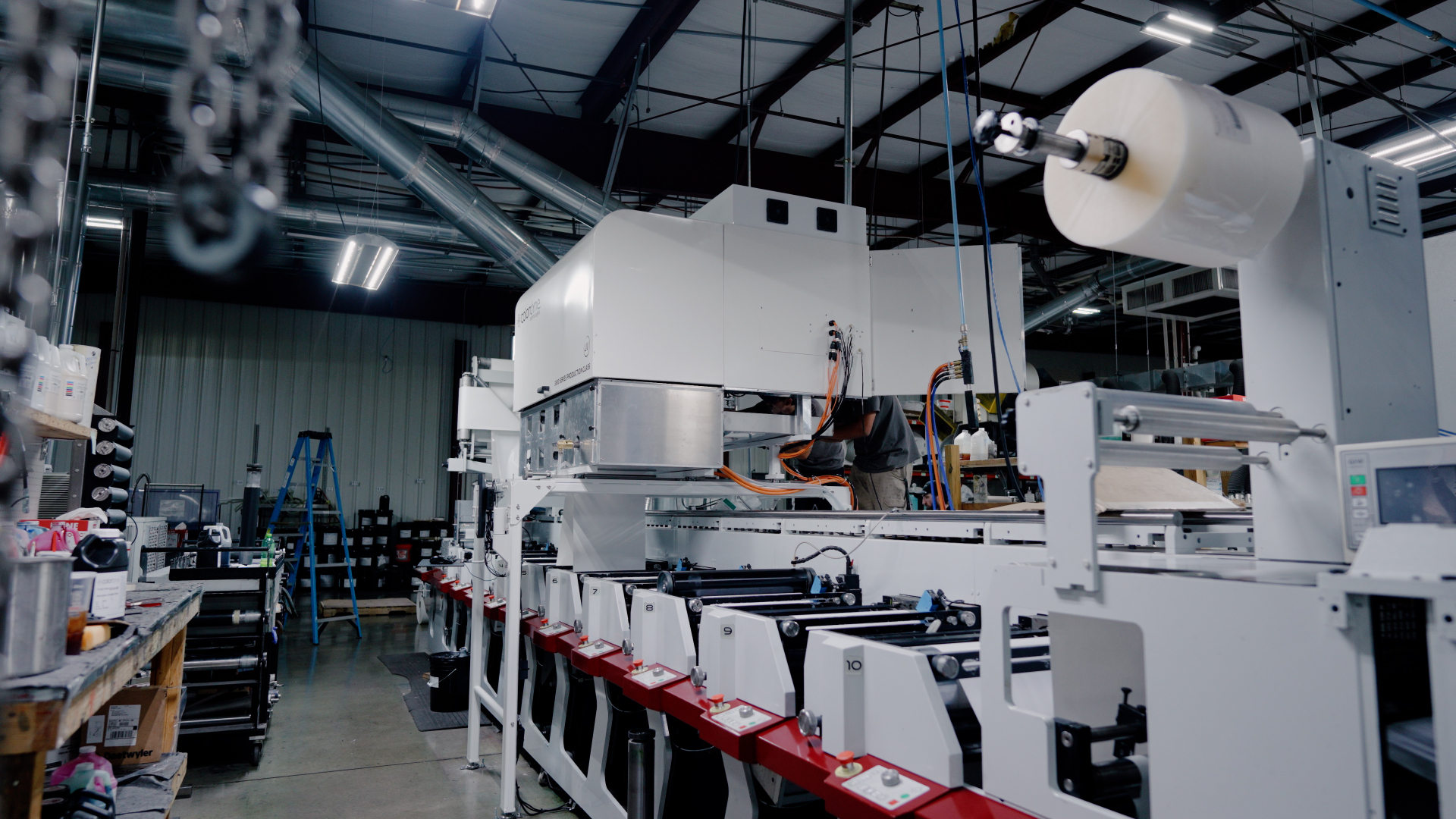
Flexos were developed to be additive machines
If you go back to look at the advent of analog printing presses, you'll see one common theme: they were developed to be additive machines. Initially single-use, print-only machines, multiple print stations, die-cutting, and other finishing capabilities were eventually added. Bring digital into the fold, and mono-black digital printing has been added to flexo equipment for decades.
So why not add process color digital capabilities to flexos? The answer has multiple layers — and, for the most part, time and technology have finally caught up. Digital inkjet is now fast enough, durable enough, and affordable enough to slot alongside existing flexo stations without giving up the finishing capabilities that make those presses valuable.
Retrofit protects the investment you've already made
The retrofit approach means converters don't have to choose between analog and digital. Existing die-cutting, laminating, and finishing stations stay in place. A Colordyne inkjet engine drops onto the line and adds process color, variable data, and late-stage customization — turning a legacy flexo press into a hybrid production platform.